News - 2026
- 6th November 2026
We Have Moved
-
We’re thrilled to announce that we’ve completed our move!
Our Bedroom Store which was at 275 Worcester Road and our Home Furnishings Store at 235–237 Worcester Road have now come together into one convenient location:
235–237 Worcester Road, Malvern WR14 1AE
Why We Made This Change
After listening to your feedback, we realised that consolidating our two stores into one space would give you a smoother and more enjoyable shopping experience.
Here’s what’s better about our new setup:
- One-stop shopping – No more walking between two shops, everything you need for your home, from beds to furniture, is now under one roof.
- Improved access – Our new store offers a lift to all three floors, making it easier for everyone to browse comfortably.
- Expert advice in one place – Our team can now coordinate your bedroom and home furnishings seamlessly, saving you time and effort.
- Still local and familiar – The move wasn’t far at all – just 200 yards up the same side of Worcester Road from our old Bedroom Store.
What This Means for You
By bringing everything together, we’ve created a simpler, more convenient way to shop. You can now enjoy the full experience, from finding the perfect bed to completing your living space, without having to visit two separate stores.
We’re excited to welcome you into our new showroom at Worcester Road, and we can’t wait for you to see what we’ve built.
Come and visit our new Home Furnishings & Bed Store today at 235–237 Worcester Road, Malvern WR14 1AE.
If you have any questions, please give us a call on 01684 573 823.
Permalink
- 6th November 2026
Introducing Our New Riser Recliner Program - Comfort And Convenience Delive
-
At Francis of Malvern, we’re thrilled to launch an exciting new personalised service directly to you: Free Home Visits for Riser Recliner advice and demonstrations. This program is tailored for those seeking the perfect blend of convenience, functionality and expert guidance in choosing a Riser Recliner chair.

What We Offer
Our program is built on a foundation of expertise and customer care. Here’s what you can expect:
Free Home Visits And Demonstrations: Our professionals will visit your home to provide a personalised demonstration of our Riser Recliners. You’ll get hands-on experience with our products without stepping out of your comfort zone.
No-Obligation Quotes: We understand the importance of making the right choice, so our quotes come with zero pressure.
Bespoke Options: Choose from 40+ leather and fabric options, and enjoy the customisation of single, dual, or Cloud Zero motor functions.
Expert Advice: With over 90 years of experience, our team offers tips, advice, and follow-up support as needed.
Unmatched Guarantees: Our Riser Recliners come with a minimum five-year warranty, giving you peace of mind.
Accessibility Benefits: Those who are registered disabled may benefit from VAT exemption, making our products even more cost effective.

Supporting Our Community
As part of our mission to help improve mobility and quality of life, we’re always looking for ways to support the local elderly community. We deeply understand your unique needs and the importance of providing trustworthy and reliable information. Through events, home demonstrations, and outreach efforts, we aim to educate and empower you to make informed decisions that enhance your independence and comfort.
Every interaction gives us the opportunity to make a real difference in the lives of our customers, and we’re proud to provide products like Riser Recliners that are designed to meet your unique needs.

Why Choose Us?
We believe in making life easier for our customers. By bringing our expertise to your doorstep, we’re removing the stress of shopping for mobility and comfort solutions. Whether you're looking for a bespoke product, reliable warranty, or trusted advice, we have you covered.
How To Get Started
Appointments are available Monday through Friday, 9am to 4pm. To book your free home visit and demonstration:
Phone: 01684 573 823
Permalink
- 24th September 2026
Bedroom Storage Ideas: Plan a Room That Works
-
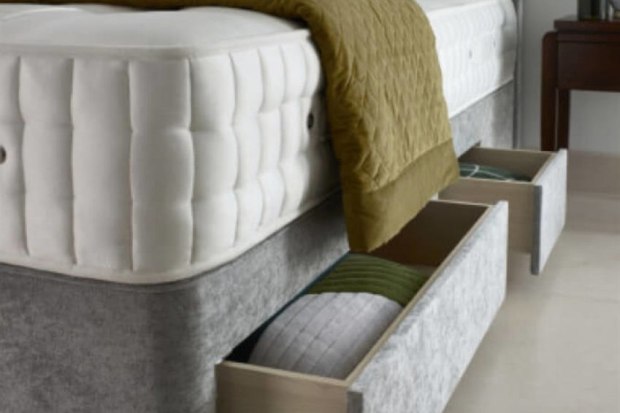
Good bedroom storage should make the room easier to use, not simply fill every available wall. The most successful plan starts with what you need to store, gives frequently used items the easiest positions and leaves comfortable space around the bed. By working through the room in the right order, you can combine wardrobes, chests, bedside tables and occasional storage without creating a crowded result.
Begin with an honest storage inventory
List what belongs in the bedroom before choosing furniture. Separate hanging clothes, folded clothes, shoes, accessories, spare bedding and seasonal items. Then consider the routine: which things are used every morning, which are needed weekly and which can live higher up or under the bed? IKEA's wardrobe guidance recommends thinking about the clothing you need to store before selecting internal organisers, and that principle applies to any storage system.
A quick sort-out at this stage can save buying furniture for items you no longer use. Keep everyday clothes easy to reach, move occasional pieces to less prominent spaces, and decide whether bulky bedding needs drawers, a blanket box or wardrobe shelving. This creates a practical capacity brief rather than a vague aim to add more storage.
Measure the whole room accurately
Draw the room and record wall lengths, ceiling height, skirting boards, sockets, radiators, windows and door swings. Include the bed's full footprint and any projection from the headboard or base. Measure the clear routes from the doorway to both sides of the bed and check where drawers and doors will open.
Wardrobes need more than a suitable wall width. Check their depth and height, the space needed to assemble or stand the unit upright, and the opening arc of hinged doors. Sliding doors can help where the gap in front is tight, although the internal arrangement and accessible opening width differ from hinged models. For chests, pull the deepest drawer fully forward in your plan. A piece that fits when closed may still block a walkway in daily use.
Place the bed before the storage
The bed usually sets the room's circulation, so establish its position first. Where possible, allow convenient access to both sides and make sure doors, drawers and wardrobes can operate without conflict. If you are choosing a new bed as well as storage, compare the actual dimensions rather than relying on mattress names alone; frames, divan bases and headboards can have different overall footprints.
Bedside tables should support how you use the room. Consider lamp space, charging, water, glasses and a book, then choose drawers or open shelves accordingly. Matching tables can give symmetry, but a smaller piece on one side may be the sensible answer in an awkward room. The useful height also depends on the finished bed height, including the mattress.
Give each storage type a clear job
- Wardrobes: hanging clothes, longer garments and adaptable shelves or rails.
- Chests of drawers: folded knitwear, T-shirts, underwear and smaller daily items.
- Blanket boxes: spare bedding or occasional textiles when there is room at the foot of the bed.
- Bedside tables: night-time essentials close to hand and less clutter around the headboard.
- Under-bed storage: seasonal or rarely used items, provided access remains straightforward.
Inside a wardrobe, match the fittings to the inventory. Longer hanging sections suit coats and dresses; shorter hanging can leave room for drawers or shelves below. Folded knitwear is often better supported on shelves or in drawers than on hangers. Small organisers prevent accessories from consuming a large drawer, and labelled boxes make high shelves more useful.
Use difficult areas deliberately
Alcoves, the wall under a window and the space above lower furniture can all contribute, but avoid adding pieces simply because a gap exists. IKEA highlights under-window cabinets and high storage as ways to use overlooked areas. A well-proportioned chest beneath a window can provide storage and a display surface without dominating the room. Preserve safe access to windows, heaters and electrical fittings, and follow the furniture manufacturer's wall-fixing instructions.
For a coordinated look, repeat a timber tone, handle finish or design detail across the main pieces rather than forcing every item to be identical. Keeping larger storage visually calm can help the bed remain the focal point. Take finish samples into the room and compare them in daylight and under your usual lamps before making a decision.
Make the final plan easy to live with
Before ordering, mark every piece on the floor with masking tape and simulate opening the doors and drawers. Walk the usual route, make the bed, open the wardrobe and check access to sockets. Confirm the delivery path as well as the room dimensions, especially for tall wardrobes and wide chests.
Browse bedroom furniture and Harrison Spinks beds, or bring your room plan to Francis of Malvern. The aim is enough capacity for what you own, with clear routes and furniture you can use comfortably every day.
Further reading
IKEA's guides to organising clothes and bedroom storage provide additional planning ideas.
Permalink
- 24th September 2026
How to Choose a Dining Table: Size, Shape and Seating
-
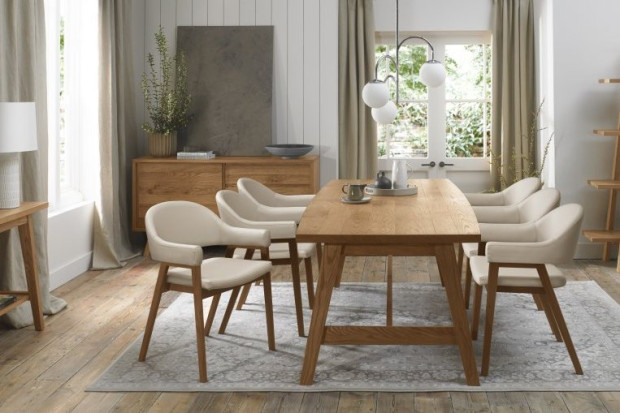
The best dining table is not simply the largest one that fits between four walls. It needs to suit the number of people who sit there most days, make room for occasional guests, work with your chosen chairs and leave the surrounding space comfortable to use. Planning those details before choosing a finish makes it easier to find a table that feels right.
Plan for everyday life first
Begin with the usual household rather than the biggest gathering of the year. A table that seats four comfortably every day and extends for eight when needed may use the room better than a permanent eight-seater. Think about everything that happens at the table: family meals, homework, working from home, craft projects or entertaining. Regular multi-purpose use may favour an easy-care surface and a generous depth, while a table reserved for dining can be chosen more purely for its style.
Count the seats you genuinely need and decide whether every chair must remain out all the time. Benches or spare dining chairs stored elsewhere can add flexibility. An extendable table keeps the everyday footprint smaller; IKEA's dining guidance recommends extension as a way to accommodate occasional extra guests.
Work from the chairs as well as the tabletop
A table's advertised seat count is a starting point, not a guarantee that every chair will fit. Chair width, armrests, table legs and the underframe all affect usable space. IKEA estimates about 60cm of table edge per diner as a planning guide: two people along each long side therefore need roughly 120cm, and three along each side roughly 180cm. Treat this as a rule of thumb and check the dimensions of the actual table and chairs.
Look underneath. Legs placed close to the corners usually leave a longer uninterrupted span for chairs. Inset legs, a central support or a deep apron can reduce knee room or stop a chair tucking fully under the top. Armchairs often need more width and may not slide beneath the table if the arms are higher than the underside. If you are mixing chairs and table rather than buying a set, compare seat width, overall width, arm height and table clearance.
Match the shape to the room
Rectangular tables are a natural fit in long rooms and give a clear place at each end. They also offer plenty of choice in fixed and extending designs. A round table removes sharp corners and keeps everyone facing towards the centre, which can work well in a square dining area or breakfast space. The central base of a pedestal design may free the edge from corner legs, although its footprint still needs checking.
Square tables suit compact square rooms and small households, but a large square can put dishes further from reach. Oval tables combine much of a rectangle's capacity with softer ends. Shape is about both appearance and movement: tape the tabletop outline on the floor, then add the chairs in their pulled-out position to see how the whole setting behaves.
Allow for movement and extension
Measure from the table edge to walls, sideboards and kitchen units, then test whether someone can pull out a chair and sit without blocking the main route. There is no single clearance that works in every home. Chair depth, user needs and whether people must pass behind a seated diner all make a difference. Place one of your intended chairs at the taped outline and use it normally.
For an extending table, plan the room at both sizes. Record the closed and fully extended length, find out where the extension leaf is stored, and check whether the legs move when the top opens. Some mechanisms keep the legs at the corners; others change the usable chair positions. Confirm how many matching chairs can sit comfortably in each configuration rather than relying only on the headline capacity.
Finish with material and proportion
Once the practical fit is clear, choose the character of the table. Timber brings natural variation and warmth; ceramic, glass and painted finishes create different visual effects and care requirements. Ask to see the care instructions for the exact surface, especially if the table will double as a work or homework space.
Compare finishes against a photograph of your floor, kitchen or existing sideboard. You do not need an exact match, but seeing the pieces together helps you choose deliberately. Sit at the table with your preferred chair: judge the legroom, the distance to the top and whether the arms tuck underneath.
Your dining-table checklist
- Everyday seat count and occasional guest count.
- Closed and extended table measurements.
- Chair width, arm height and space between table legs.
- Routes around the table with diners seated.
- Extension operation, leaf storage and surface-care instructions.
Explore dining furniture and Bentley Designs, or contact Francis of Malvern with the dimensions of your room and preferred chairs.
Further reading
IKEA's dining-room planning advice and extending-table ideas provide useful starting points for space planning.
Permalink
- 24th September 2026
How to Choose the Right Sofa Size for Your Living Room
-
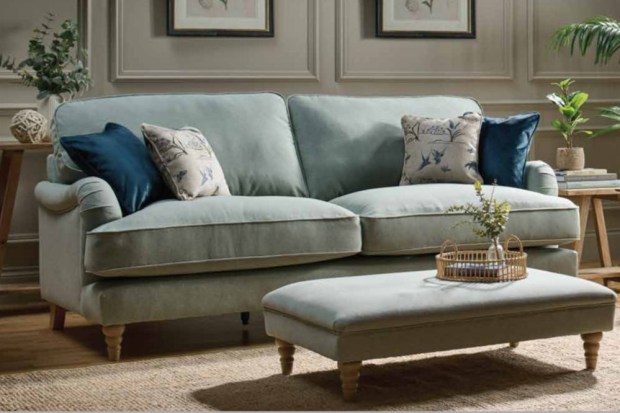
A sofa can look perfectly proportioned in a showroom and feel quite different once it is in your living room. The right choice has to do three jobs at once: seat the people who use the room, leave enough space to move around, and travel safely from the delivery vehicle to its final position. A tape measure and a simple floor sketch help you check all three before ordering.
Start with how the room is used
Before comparing widths, think about the household. Is the sofa mainly for two people to read and watch television, or does it need to accommodate a family every evening? Do you regularly host guests? Would a sofa and two chairs suit the room better than one very large sofa? The answers help you choose between a compact two-seater, a generous three-seater, a corner arrangement or a more flexible combination of seating.
Comfort is personal, too. A deeper seat can encourage relaxed lounging, while a more upright design may be easier for some people to get in and out of. Reclining furniture needs additional operating space, so check the full open dimensions of the exact model. Never assume that two sofas described with the same number of seats will occupy the same footprint; compare the stated width, height and depth for each piece.
Measure the room, not just the empty wall
Measure the usable floor area and mark doors, windows, radiators, fireplaces, sockets and other fixed features. Note where doors swing and where people naturally walk through the room. A sofa that technically fits along a wall can still interrupt a route or crowd a side table.
Use low-tack masking tape to outline the proposed sofa on the floor. Mark its full width and depth, then place existing chairs or boxes at roughly the planned height. This makes the scale easier to judge than dimensions on paper. Sit in the room and look at the outline from the doorway and your usual positions. Allow enough clear floor for someone to pass comfortably and enough room to use tables, drawers and recliners. The exact clearance depends on the room and household, so test the layout rather than treating one number as universal.
Check the complete delivery route
The route into the room matters as much as the space inside it. G Plan advises recording the sofa's height, width and depth, measuring every doorway it must pass through, and paying attention to the narrowest points in halls and stairs. Check the front door, internal doors, porch, hallway corners and the entrance to the chosen room. Include projecting radiators, shelves, skirting boards and light fittings.
For stairs, measure the narrowest width, the available height above the flight and the turning space at landings. If the item must be lifted over a banister, the gap to the ceiling matters. In a flat, measure both the lift door and the lift interior, and confirm any weight restriction. DFS also recommends considering whether removable cushions, feet or other detachable parts reduce the delivery dimensions, but this varies by model and should be confirmed before purchase.
- Record the product's stated width, height and maximum depth.
- Measure all door openings at their narrowest usable point.
- Check corners diagonally and note where the sofa must pivot.
- Measure stairs, landings and lifts, including overhead clearance.
- Clear pictures, lamps, rugs and small furniture before delivery.
Choose a layout that can evolve
A balanced room does not require every item to match. A main sofa can be paired with an accent chair or compact recliner to create conversation and give people different types of support. If ease of rising is a priority, compare seat height, arm support and powered options in person. A riser recliner serves a different purpose from a low, deep lounge chair, so the room plan should reflect how each seat will actually be used.
Think about changes in the household, too. Would separate chairs be useful if you rearranged the room? Could a footstool move out of the way when guests visit? Do you need room for a reading lamp beside one particular seat? These small decisions can be more valuable than squeezing in one extra place on the sofa.
Bring your measurements when you shop
Take your room sketch, access measurements and a few photographs to the showroom. Include your current furniture if any of it is staying. Ask for the dimensions of the exact configuration you are considering, including any delivery measurements that differ from the assembled size.
Browse our sofas and G Plan upholstery, or contact Francis of Malvern with your measurements. Confirming both the room layout and access route gives you a much clearer basis for choosing.
Further reading
G Plan measuring guide and DFS delivery measuring guide.
Permalink
- 24th September 2026
How to Care for Fabric and Leather Upholstery
-
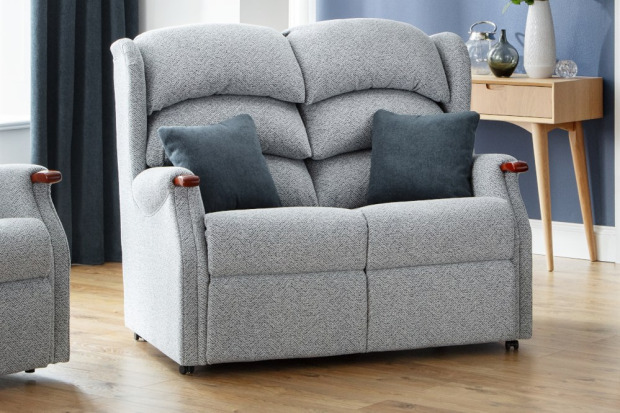
A sofa's care routine should begin with its fabric or leather specification. Two covers that look similar may need different treatment, and a cleaning method that suits one can harm the other. Keep the care instructions somewhere easy to find and treat them as the first reference whenever a mark appears.
Identify the cover before reaching for a cleaner
Make a note of the manufacturer, model and exact cover name when your furniture arrives. Photograph the label and keep the order confirmation. “Grey fabric” or “brown leather” is not enough information for a retailer to give reliable cleaning advice.
Check whether there is separate guidance for the main upholstery, scatter cushions and any special finish. Do not assume a zipped cover can go into a washing machine: G Plan explains that zips may be present for manufacturing access, and warns against machine-washing its upholstery covers. Where instructions are missing, ask the retailer for a replacement before trying a treatment.
Build a gentle weekly routine
G Plan recommends light weekly vacuuming for fabric upholstery, regular cushion dressing and protection from direct sunlight. Its leather guidance instead calls for gentle dusting and a damp cloth without over-wetting. It specifically advises against baby wipes and household cleaning products on its leather.
Follow the instructions for your particular furniture when choosing an attachment or dressing the cushions. Make the routine easy to maintain: keep the approved instructions with your cleaning supplies and include upholstery in the weekly room tidy. Check beneath loose cushions for objects that could scratch or mark the cover, without reaching into a powered mechanism.
Act calmly when something spills
G Plan's fabric guidance recommends lifting excess material carefully and blotting liquid without rubbing. Avoid a vigorous scrub: it can spread a mark and disturb the surface. Before adding water or any product, check the instructions for the exact cover. Specialist easy-clean fabrics may have their own procedure, which should take priority over generic advice.
If the mark remains, stop experimenting. Record what was spilled, when it happened and what you have already used, then ask the retailer or an appropriate upholstery-cleaning professional. A clear photograph taken in natural light helps explain the problem. Mention the cover name and any protection treatment purchased with the furniture.
Understand normal changes in appearance
Celebrity's care guidance explains that leather is a natural material and differs from man-made upholstery. Natural markings and changes with use should be considered in the context of the specific leather finish. Its fabric guidance also warns against prolonged direct sunlight. Positioning matters as much as cleaning, so notice where strong sun falls during the day before settling on the final layout.
When a change worries you, compare photographs rather than relying on memory. Take a clear picture of the whole seat and a closer image of the affected area. Ask the retailer whether the appearance is expected for that material, whether maintenance is needed or whether the issue should be inspected. This is more useful than applying a conditioner simply because it is labelled “for leather”.
Keep moving furniture easy to maintain
For a recliner or riser recliner, keep the operating instructions alongside the upholstery guidance. Use the manufacturer's cleaning and isolation instructions around electrical parts and mechanisms. Do not treat a fabric-care guide as permission to dismantle the chair.
When rearranging the room, check the operating space again with the exact model instructions. Cables, rugs and side tables should not interfere with the movement. Ask for help if the furniture is too heavy or awkward to move safely, and use the maker's recommended moving method.
A useful care file for your furniture
- Order confirmation, model and exact fabric or leather name.
- Manufacturer's cleaning and operating instructions.
- Details of any separately purchased protection plan.
- Delivery photographs and notes about any later marks.
- Your retailer's contact details for questions or replacement guidance.
Explore G Plan upholstery and Celebrity furniture, or contact Francis of Malvern with your model and cover details if you need help finding the right instructions.
Further reading
Consult the G Plan care guides and Celebrity fabric and leather care guide. The instructions supplied with your own furniture take priority.
Permalink
- 24th September 2026
How to Choose a Mattress: Your Showroom Checklist
- Permalink
- 18th September 2026
Francis Of Malvern Are Green

-
Here at Francis of Malvern we are passionate about doing our bit to contribute to a greener, healthier planet. We’re conscious of our environmental footprint and are keen to do our utmost to create a more sustainable workplace for our employees and our customers.
How Do We Play Our Part?
We are delighted to announce that we now recycle 97% of all our waste. When we dispose of your old sofas and beds, they no longer go to landfill, but are instead recycled by Go Greener, a local waste management company based in Leigh Sinton. Mattresses are more complicated. The combination of different materials, often attached to springs makes them more difficult to deal with responsibly. However, we have a solution! We store them away in a safe area until we have an amount worthy of being collected at which point they are taken away to be stripped down into their different materials; fabric, springs and foam are all recycled and re-used.
What about cardboard, plastic or even carpet waste? At our warehouse we have specialist bailing equipment which condenses it all down into compact bails which are then transported to Go Greener. Bailing all of these items ensures that we are not in constant transit from Malvern Link to Leigh Sinton, further reducing our carbon footprint.
But that’s not all. The roof of our Home Furnishing Store alone supports 112 solar panels generating 23,615 Kw/h per annum, with an A+ Energy performance asset rating and Net Zero CO2 emissions. A similar number on top of another of our properties in the Link double this output.
Working With Our Suppliers
Although it is not always straightforward, we have been working hard behind the scenes to identify suppliers who share our environmental concerns.
In our Flooring Centre, we are pleased to now offer the Sedna carpet range from Associated Weavers. This ingenious product is created using rope from fishing nets that have been pulled out of the ocean. Who knew that old fishing nets could feel so good under foot!
At our Bedroom Centre we now also stock a range of plant-based mattresses from Silentnight. Suitable for Vegans, these are produced using responsibly sourced plant-based fibres that are low-input and high-output, meaning that they are self sufficient and can grow using less harmful pesticides and fertiliser, reducing negative impacts on biodiversity.
Permalink
- 1st September 2026
How Often Should I Change My Mattress? Do I Need A New Base Too?
-
If you're waking up with pains, tossing and turning more than usual or noticing your bed isn't as comfortable as it once was, you might be wondering: Is it time to replace my mattress? But along with that comes another common question: Do I need a new bed base as well?
In this guide, we’ll walk you through everything you need to know about mattress lifespan, signs it’s time for a replacement, and when you should also consider upgrading your base. Plus, we’ll answer some of the most frequently asked questions to help you sleep better.
How Often Should You Replace Your Mattress?
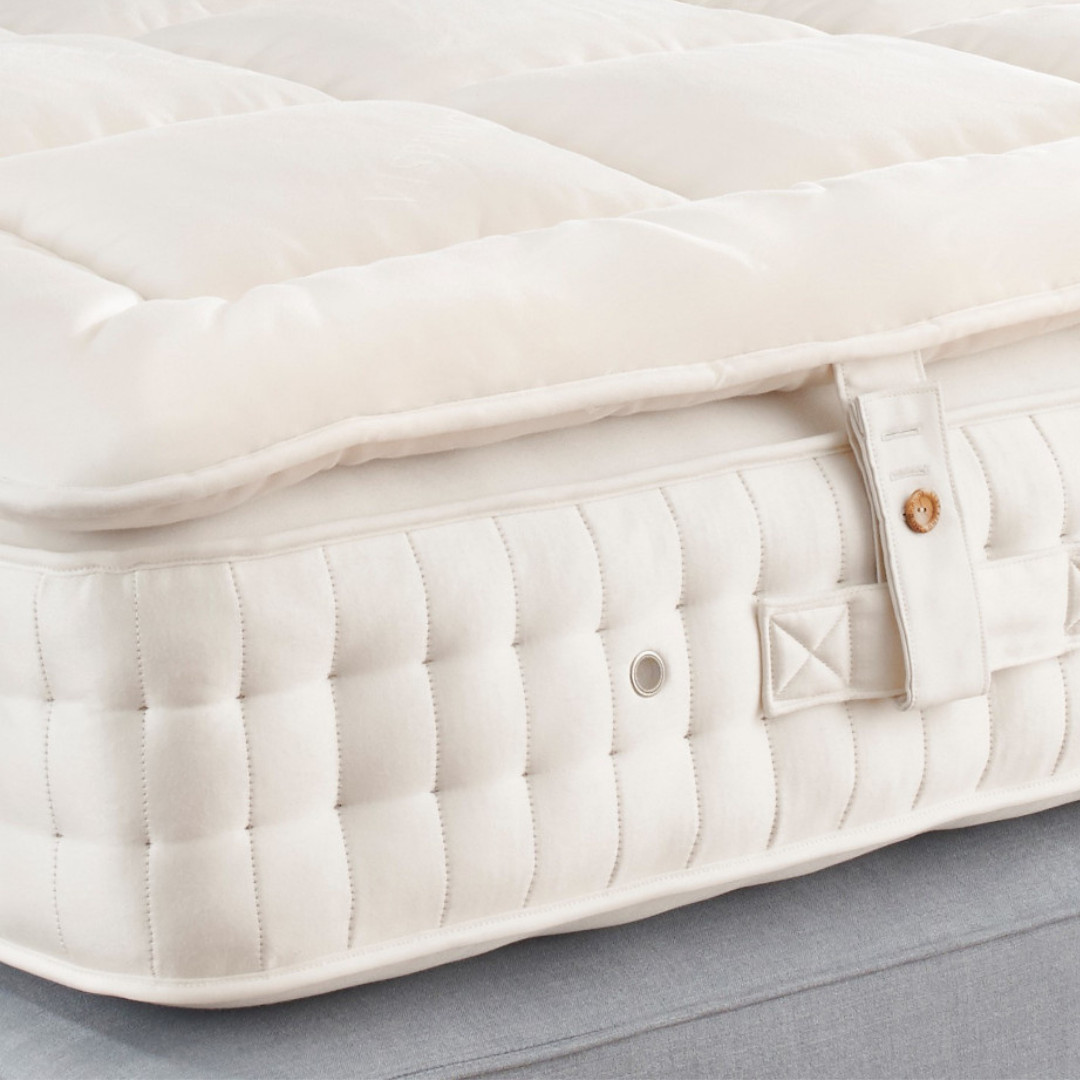
The general rule of thumb is to replace your mattress every 7 to 10 years, depending on the type of mattress and how well it’s been cared for. However, that number can vary widely based on material, use and sleep habits.
Lifespan by Mattress Type:
- Open Coil Spring: 5 years
- Pocket Sprung: 7–10 years
- Memory foam: 7–10 years
- Latex: 10–12 years (sometimes longer)
- Hybrid: 6–8 years
- Pillow top: 5–7 years
What Are the Signs You Need a New Mattress?
Here are some signs your mattress may have reached the end of its life:
- Sagging or unevenness: A dip or crater in the middle is a big red flag.
- Increased aches and pains: Especially in your back, neck, or hips.
- Poor sleep quality: Trouble falling or staying asleep, or waking up frequently.
- Noticeable noise: Creaks, squeaks, or coils poking through.
- Visible wear and tear: Rips, stains, and broken seams.
- Allergy flare-ups: Dust mites and allergens can build up over time.
Do I Need a New Bed Base Too?
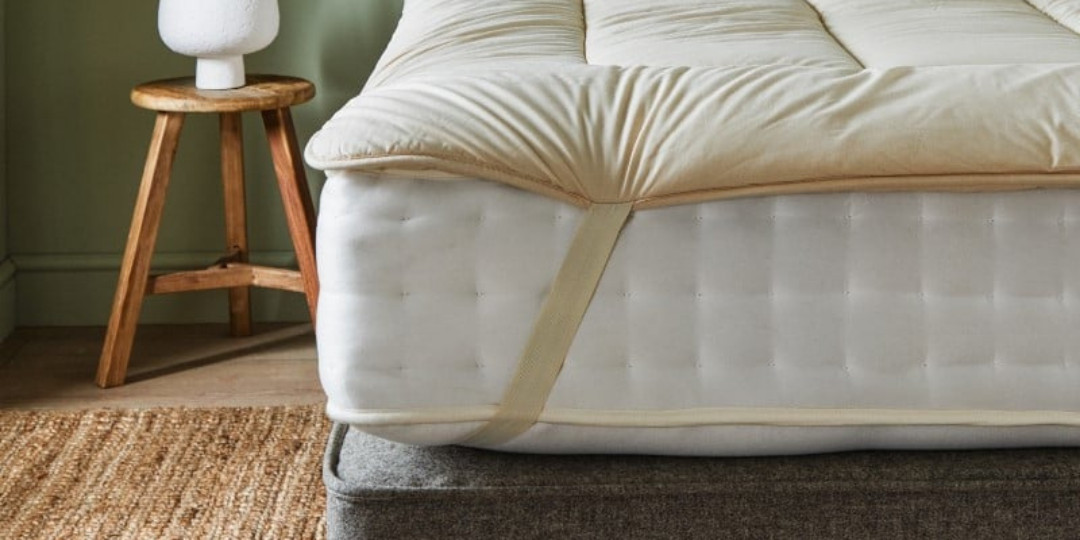
Yes and no. It depends on the type and condition of your current base.
Why Your Bed Base Matters
Your mattress relies on a stable, supportive foundation. A worn-out or unsuitable base can affect the comfort and lifespan of your mattress, no matter how new it is.
Commonly Asked Questions About Mattress & Base Replacement
1 Can A Bad Base Ruin A Good Mattress?
Absolutely. A sagging, broken, or unsupportive base can cause your mattress to wear out faster, lose support and become uncomfortable.
2 How Do I Know If My Bed Base Needs Replacing?
Watch for these signs
- Slats are bent or broken
- Base is noisy or creaky
- Frame is unstable or wobbly
- Gaps between slats are too wide (more than 3 inches)
- Base doesn’t match your new mattress type (eg sprung base with memory foam mattress)
3 Do Different Types Of Mattresses Need Specific Bases?
Yes. For example
- Memory foam and latex mattresses require solid or closely spaced slats
- Hybrid mattresses benefit from adjustable or slatted bases
- Innerspring mattresses can work with box springs or slatted frames
4 What Types Of Bed Bases Are Available?
- Sprung Divan Base: Great for spring mattresses
- Platform bed: Works with most modern mattresses
- Slatted base: Must have slats and no more than 3 inches apart for foam mattresses
- Solid foundation: Perfect for memory foam or latex
5 When Should You Replace Both Mattress and Base?
Replacing both is a good idea when
- Your base is older than 10 years
- You’re switching mattress types (e.g., from spring to memory foam)
- You’ve noticed squeaks, sagging, or instability
- You’re investing in better sleep quality and want to optimize both parts
6 Can You Put a New Mattress on an Old Base?
You can, but it’s not always recommended. If the base is structurally sound and provides even support, it may be okay. However, placing a new mattress on a worn-out base can lead to
- Shorter mattress lifespan
- Voided warranties
- Discomfort or poor spinal alignment
Mattress and Base Buying Tips
Here are a few tips to ensure you're making the right purchase
- Check the warranty of both your mattress and base, some mattress warranties are void if used on an improper base
- Measure your space and make sure both fit your bedroom layout
- Read reviews and choose quality brands known for durability and support
- Try it out in-store or choose online brands with good return policies
- Consider your sleep needs - firmness, back support, motion isolation, etc
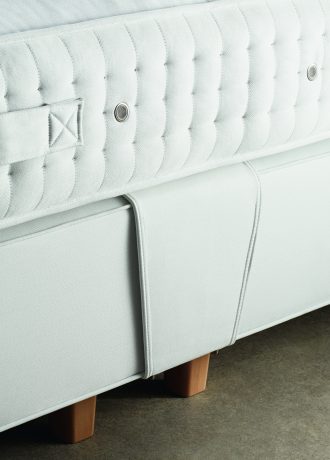
Optimize Your Sleep: Invest in the Right Foundation
Just like a house needs a solid foundation, your sleep system does too. Whether you’re dealing with morning pain, poor sleep quality, or just upgrading your bedroom setup, don’t overlook the importance of your bed base.
A good mattress without proper support is like running a marathon in worn-out shoes, you won’t get far, and you’ll probably hurt the next day.
In Conclusion
So, how often should you change your mattress? Every 7 to 10 years is a safe bet. But don’t forget the base. If your bed frame is aging, damaged, or incompatible with your mattress, it might be time to upgrade both for the best sleep possible.
Still unsure? Ask yourself:
- Am I sleeping well?
- Is my mattress sagging?
- Does my base creak or feel unstable?
If the answer to any of these is yes, it’s time for a change.
Permalink